


Corporate trip flight: from enquiry to check-in
The success of every business trip, conference or incentive journey begins long before the destination is reached. When travel logistics involve dozens or hundreds of people, scheduled services often mean a fragmented group, inflexible timings and the stress of connections. Corporate aircraft charter restores full control of the timetable and ensures travel comfort for every participant. What does the process look like in practice? What should you know before choosing an ad hoc charter? Follow the entire procedure with us: from the flight enquiry to the aircraft doors closing at the airport you choose.
Contents
- Step 1: define the travel objective and collect key data
- Step 2: operational verification and the advantage of direct contact
- Step 3: a timetable that works for your business
- Step 4: aircraft personalisation and a premium setting
- Step 5: comprehensive logistics — when you need more than an aircraft
- Golden rules for organising B2B flights
Step 1: define the travel objective and collect key data
Every enquiry for passenger-aircraft charter starts by defining the nature of the event. A discreet executive trip, a team-building flight and mass transport for an international conference are planned differently. To make the quotation process swift, the basic information package is collected at the outset:
- Route: preferred departure and arrival airports (or at least the destination cities).
- Timing: exact travel dates and expected arrival/departure times (if they can be defined at the ad hoc charter-enquiry stage).
- Group: passenger count and baggage-hold requirements (for example, whether event equipment, sports equipment or musical instruments must be carried).
- Additional services: an outline of any extra services (on-board catering, a personalised check-in desk, airport–hotel–airport transfers, accommodation, an on-site programme, etc.).
The more precise the information, the sooner Enter Charter experts can confirm operational feasibility and present an optimised cost option for the corporate aircraft charter.
Step 2: operational verification and the advantage of direct contact
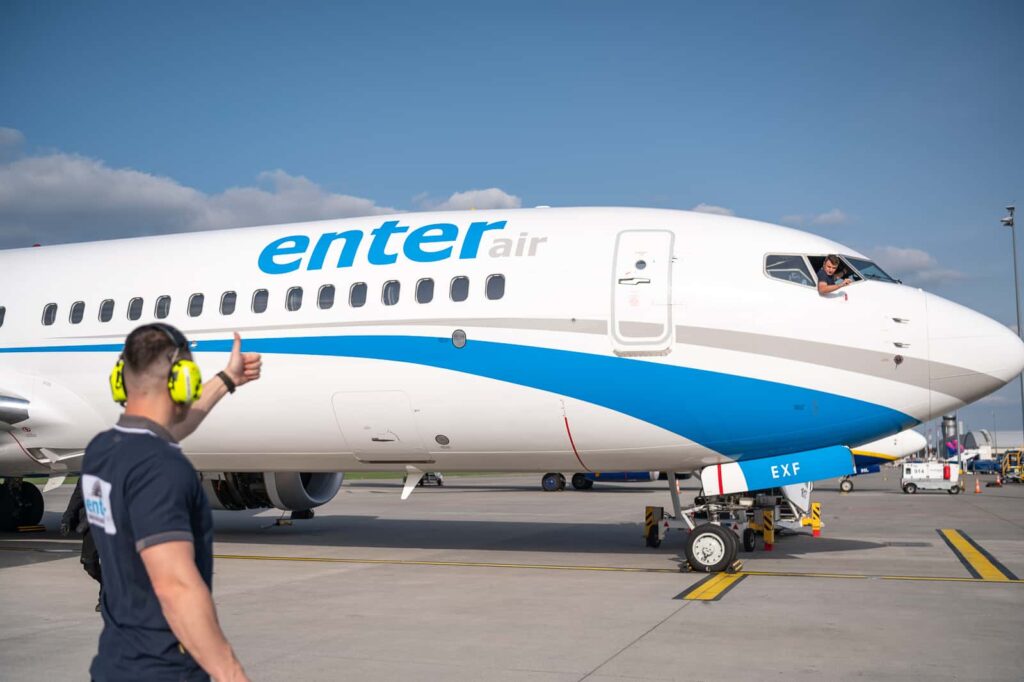
Once the information is analysed, technical verification begins. This includes the availability of the fleet (for example Boeing 737 aircraft), the technical parameters and capacity of selected airports, slot restrictions and flight-crew duty-time limits.
This is the stage at which the advantage of working directly with the operator on B2B flights is especially clear. The process is not about intermediaries copying offers; aviation experts reliably confirm that the planned travel scenario is fully safe and feasible.
Good to know! An ad hoc flight is simply a flight arranged for a specific occasion, on a particular route and date. In practice, it is a charter or special flight tailored to a one-off purpose, such as an executive trip, group transport to an event or business travel. An ad hoc flight offers greater flexibility, but each operation is priced individually. A regular charter more often follows an agreed timetable, offers greater predictability and is based on a repeatable cooperation model between operator and tour operator.
Step 3: a timetable that works for your business
In MICE projects (Meetings, Incentives, Conferences and Exhibitions), the flight is an integral part of the event timetable. A chartered aircraft does not impose fixed limits: the aircraft adapts to the conference or incentive-trip plan.
This travel model aligns the flight operation with the group’s real needs instead of subordinating it to scheduled-service timetables. A corporate aircraft charter avoids additional overnight stays caused by inconvenient departure or arrival times, shortens transfers and minimises delay risk from connections at different airports. The whole group travels together, simplifying logistics, increasing participant comfort and making the entire trip more predictable.
Step 4: personalisation of the chartered aircraft and a premium setting
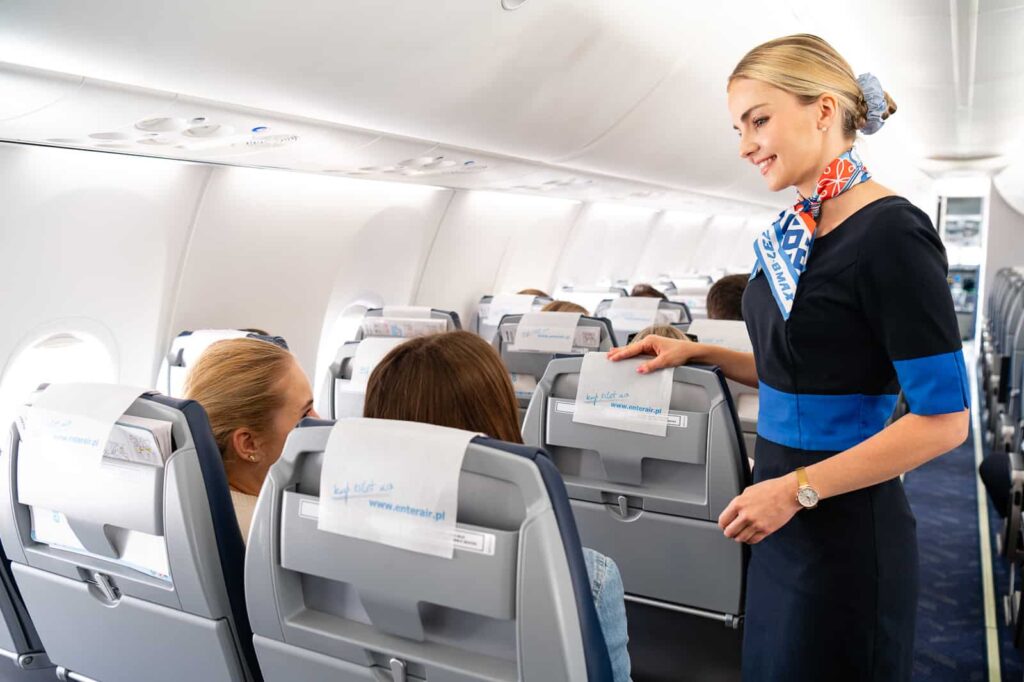
A corporate charter provides space to build a brand experience from the moment passengers board. Depending on budget and needs, the aircraft environment can be personalised. Commonly used solutions include additional services such as:
- Dedicated on-board catering menus (including special diets).
- Visual branding (for example personalised headrest covers or a dedicated company-logo check-in desk).
- A separate check-in route for VIP guests and access to the Fast Track service.
- On-board announcements from the crew addressed directly to the company.
The scope of personalisation is always selected for the travel objective and the event’s character. Sometimes the priority is simply a punctual, comfortable flight; at other times, the flight becomes the official and prestigious opening of an incentive programme. Every flight can become a mobile office, conference room and networking space in one.
Step 5: comprehensive logistics — when you need more than an aircraft
Travel rarely ends on the airport apron. Ground logistics are organised alongside flight planning. International-conference participants, executives attending meetings abroad and employees travelling as part of an incentive programme need accommodation, catering and often a sightseeing programme for key attractions or reservations in hotel conference rooms. Through Enter Charter’s connection with the experienced tour operator Nekera travel agency, the entire trip can be organised comprehensively — from transfers and accommodation to catering, on-site attractions and insurance.
Golden rules for organising B2B flights
To keep ad hoc charter management smooth, the industry uses proven logistics practices. Before signing the agreement, make sure that you have:
- One decision point in your company: appointing one person on the client side to approve passenger lists, timings and contracts materially reduces the risk of errors and speeds up the corporate aircraft-charter process.
- Emergency communications plan: agreeing an information path for sudden weather or operational changes makes the response calm and predictable.
- Consistent passenger lists: one group means easier check-in, clear travel instructions and no errors when allocating seats on coach transfers. Ensure the operator receives correct information by the agreed deadline.
- Post-trip debrief: collecting conclusions after the flight — what worked perfectly and what information was missing — helps organise subsequent trips even more efficiently and at an optimised cost.
For a corporate client, knowledge of the rules and clear communication dramatically shorten the decision-making chain: one supplier, one contract and a fully coherent timetable before, during and after the flight.
A corporate aircraft charter is worth considering when a larger group travels, scheduled services require connections, privacy matters, a premium setting is needed or the organiser wants control over every stage of the journey. A good starting point is the MICE and corporate trips page, and, when planning the budget, the guide to what affects charter pricing.
Would you like to charter an aircraft for your company? Send a flight enquiry or call us 24/7 on +48 512 544 556.
